
1. In two or three sentences, what was your main role in FruitCREWS, and which achievement of your Working Group (or area of responsibility) are you most proud of?
I acted as Grant Awarding Coordinator for the Action’s mobility grants. Mobility grants were used extensively as a networking tool, mainly in the form of Short-Term Scientific Missions (STSMs). We managed to use all the available funding in all four Grant Periods. I am glad that a critical mass of young scientists took this opportunity, several of them from Widening countries.
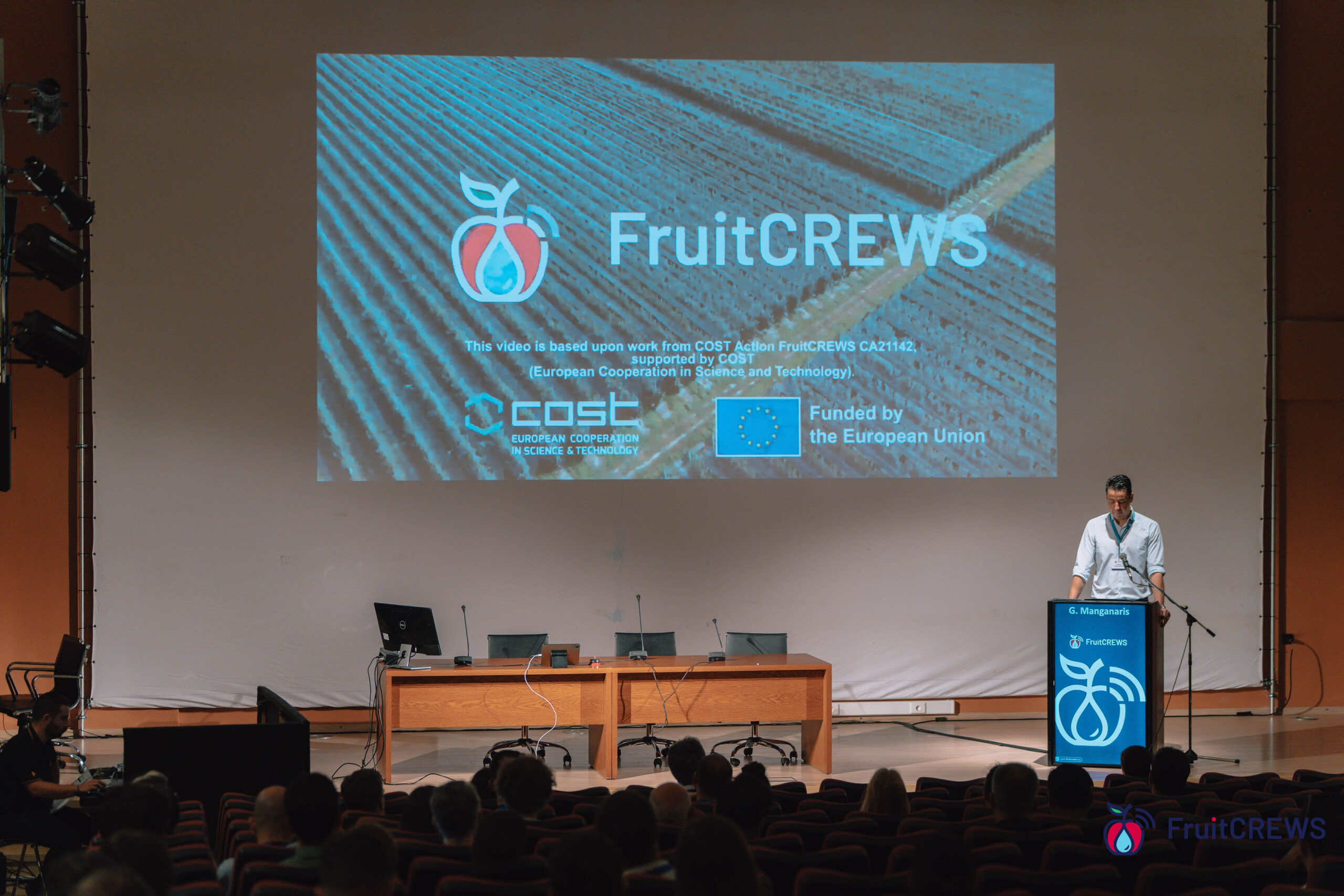
My greatest achievement in this COST Action was the organization of the conference-type annual meeting held in Naoussa, Greece, in June 2025. The scientific program comprised 6 keynote talks, 33 oral presentations and 24 posters, and attracted approximately 120 attendees. The Book of Abstracts can be downloaded from the FruitCREWS website.
2. What is your most memorable moment from the four years of the Action (a meeting, a field visit, a discussion or a person you met)?
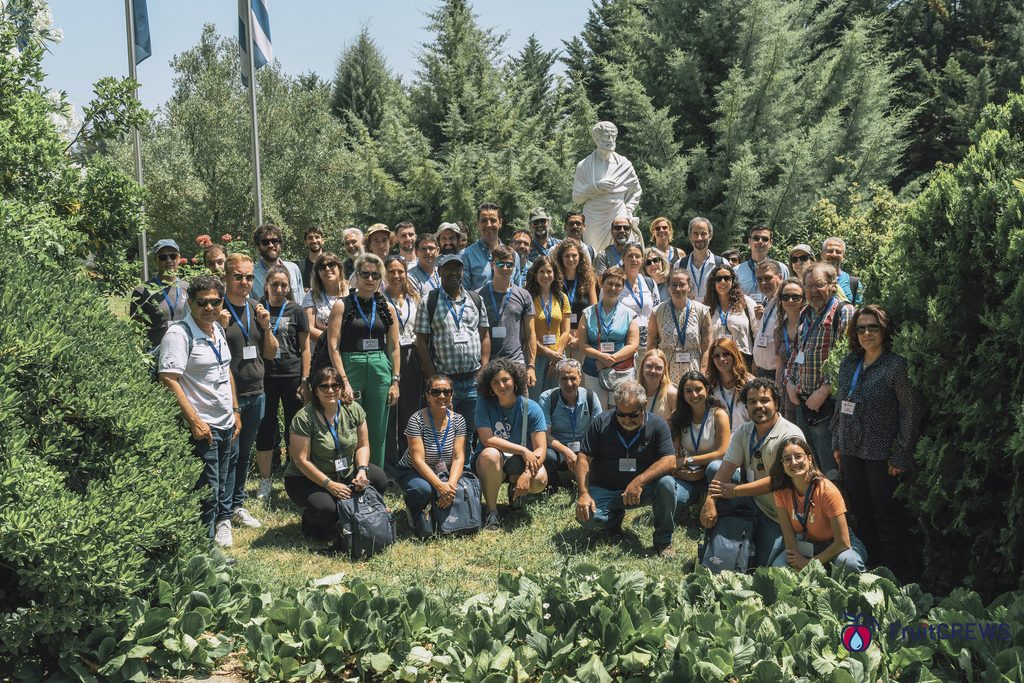
My most memorable moment was the appreciation I received for organizing the meeting in Greece, for both its scientific and its social program.
Among the people I met, I was particularly impressed by the scientific excellence of Dr Pablo Zarco. He delivered a top-notch talk on new developments in hyperspectral imaging to track the effects of water stress on photosynthesis. This talk was a great example of how scientific work can be translated into practical benefits for farmers.
3. In one sentence: what will remain of FruitCREWS in five years’ time?
The understanding that complementary expertise is a prerequisite, and that there is an urgent need to translate research into value for farmers.
4. FruitCREWS funded more than thirty Short-Term Scientific Missions and other grants. Can you share one example of a grant that led to something lasting, such as a joint publication, a new project or a long-term collaboration?
I consider particularly important the STSMs carried out by participants from non-academic organizations at academic institutions. One example is the STSM carried out by Jorge Duarte, an independent berry expert, at the Cyprus University of Technology. Its objective was to strengthen the bridge between academic methods and commercial farm decision-making, particularly in irrigation, plant stress and nutrition monitoring, and the post-harvest shelf-life of new berry genotypes.
5. How did the grants open opportunities for early-career researchers and for researchers from Inclusiveness Target Countries?
A good number of applicants from Inclusiveness Target Countries benefited from mobility grants, and the vast majority of beneficiaries were early-stage researchers. I would also like to take this opportunity to thank InoSens for (i) promoting the open calls for mobility grants and (ii) the excellent dissemination of the work carried out, which is publicly available on the website: https://cost-fruitcrews.eu/mobility/stsms/
6. What advice would you give to a young researcher who wants to build a career in water management for fruit crops?
Today, early-stage researchers have a growing number of opportunities to seek funding for networking or for carrying out part of their projects. They should make the most of these opportunities.
Water management in fruit crops is an alarming issue, in Europe and beyond. To build a career in this field, young researchers must always keep in mind that their results should be readily applicable. They also need to do field work and not limit their activities to the lab.
Prefer to read offline? Download the interview as a PDF, here.