
1. In two or three sentences, what was your main role in FruitCREWS, and which achievement of your Working Group (or area of responsibility) are you most proud of?
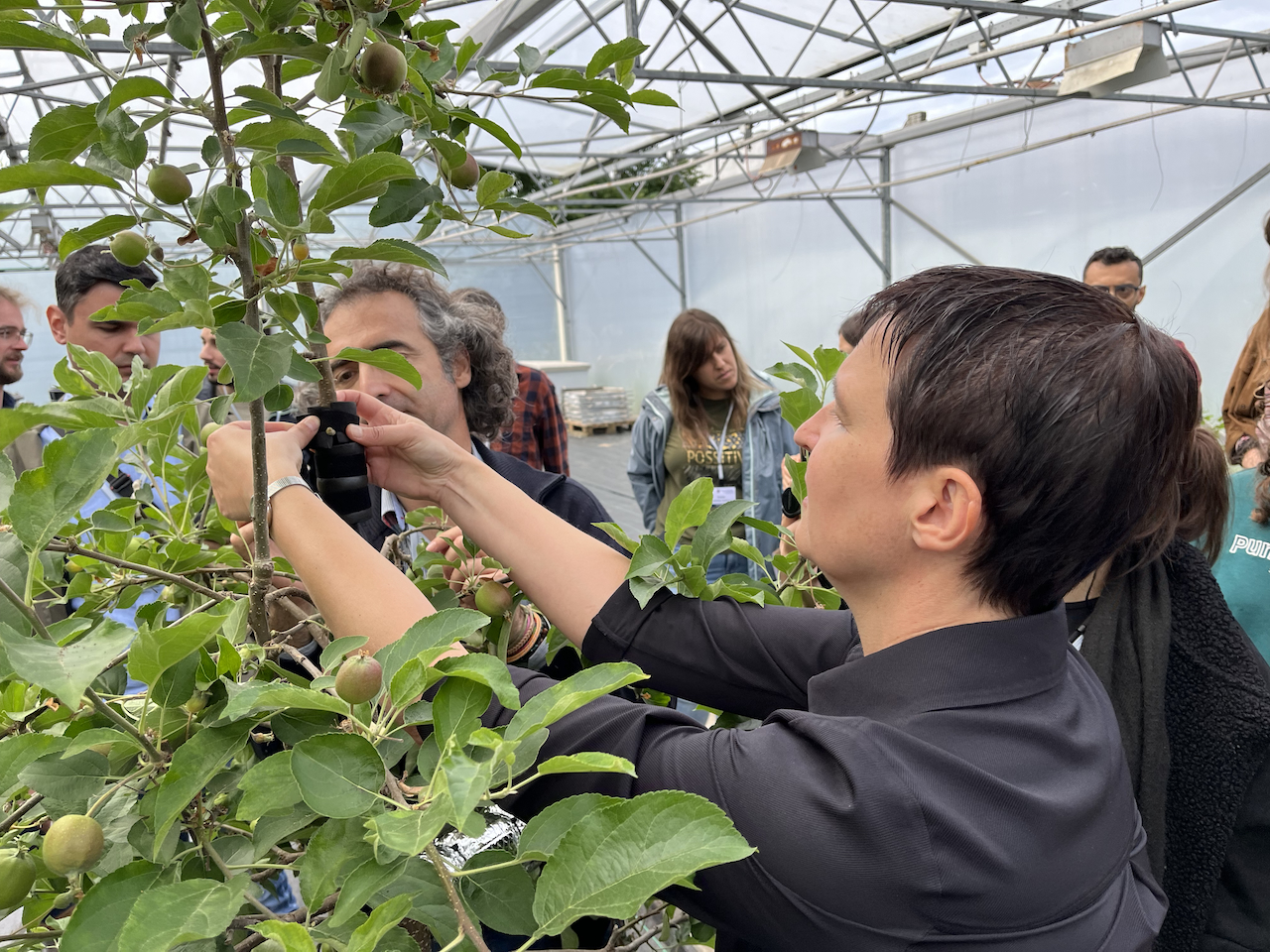
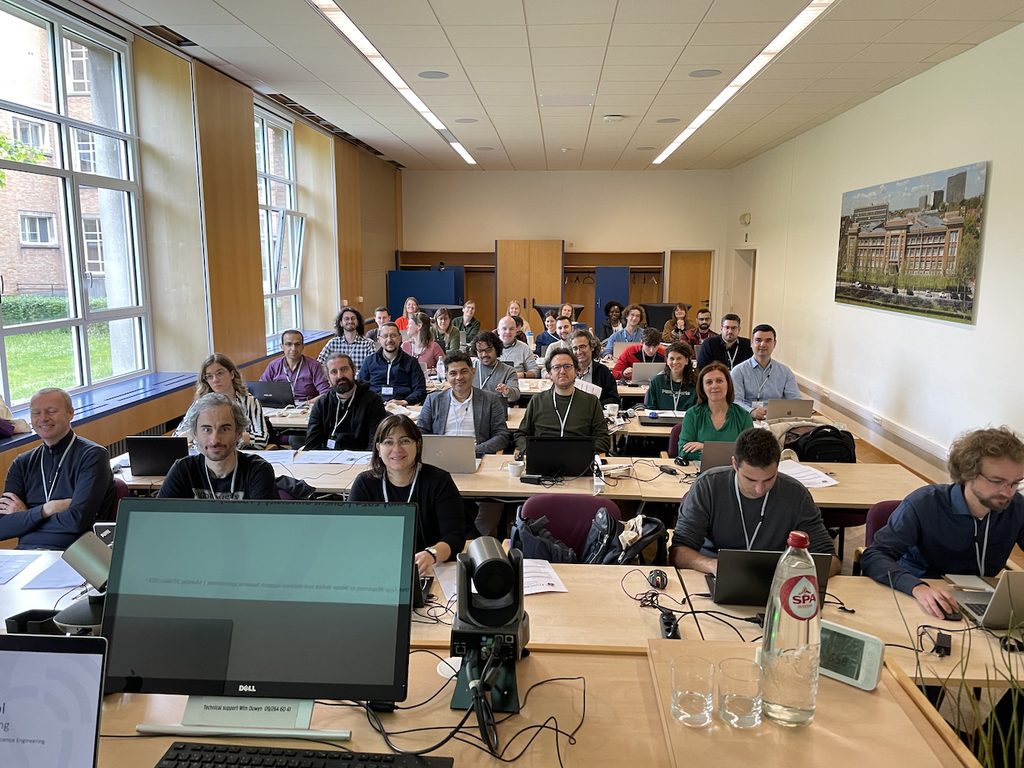
As leader of Working Group 2 (WG2), my main role was to bring together researchers working on different modelling approaches and to explore how models, particularly mechanistic plant models, could be integrated with plant-based sensing technologies to improve irrigation scheduling and decision support. I am particularly proud of the training school we organised in Ghent in May 2024, where we brought together an enthusiastic international community of researchers eager to explore the potential of plant sensors and modelling. Another important achievement was mapping the diversity of existing modelling approaches and identifying their strengths, limitations and knowledge gaps. These insights provide a valuable foundation for future research and, hopefully, the next generation of irrigation decision support tools.
2. What is your most memorable moment from the four years of the Action (a meeting, a field visit, a discussion or a person you met)?
It is difficult to choose just one! I particularly remember our lively brainstorming sessions in Naoussa, where we exchanged ideas and discovered new opportunities for collaboration. The discussions with the core group, often continuing over lunch, were equally memorable and reflected the wonderful atmosphere within FruitCREWS. Another highlight was our visit to the European Parliament in Brussels, where we had the opportunity to bring our scientific insights into discussions on future European water management. But perhaps most importantly, I will remember the people, the friendships and even the little things, such as introducing the term ‘Wu-G’ for Working Group!
3. In one sentence: what will remain of FruitCREWS in five years’ time?
A strong and lasting international community of researchers and experts who know and trust each other, combine their complementary expertise, and continue working together towards integrated, science-based solutions for climate-resilient fruit production and sustainable water management.
4. WG2 worked on bringing mechanistic models and plant-based sensing closer to irrigation practice. What progress did the network make, and what is still missing before these tools are used on farms?
One important achievement was recognising the diversity of modelling approaches and demonstrating how plant sensors and models can complement each other to improve our understanding of fruit tree water relations and support irrigation decisions. I strongly believe that the next generation of irrigation scheduling tools could benefit from integrating plant-based measurements with mechanistic models, allowing us to derive meaningful hydraulic parameters that reflect how trees respond to changing environmental conditions. At the same time, it was striking to see how strongly current irrigation practices still rely on traditional FAO-based approaches. A considerable gap remains between our physiological understanding of plant water relations and its practical implementation. FruitCREWS helped us identify this gap more clearly and brought together the expertise needed to start bridging it.
5. The Action organised training schools, including the school on plant sensors and modelling in Ghent. How did FruitCREWS shape the next generation of researchers in this field?
I believe one of the greatest strengths of FruitCREWS was its investment in young researchers. During the training school in Ghent, we offered participants hands-on experience with plant sensors and showed how mechanistic models can help translate sensor measurements into a deeper understanding of plant functioning. Rather than simply collecting data, we encouraged participants to explore the underlying physiological processes and discover how these insights could contribute to smarter irrigation strategies. I hope we inspired them to think beyond existing approaches and develop the next generation of applications. WG2 also played an important connecting role between the physiological knowledge and sensing technologies of WG1 and the more applied irrigation strategies and decision support systems developed by the other Working Groups. This integration of expertise, together with the personal connections established during FruitCREWS, will be invaluable for the next generation of researchers.
6. How does European research on plant water relations, sensing and modelling compare with other regions, such as the United States, Australia, Israel or China? Where does Europe lead, and where does it need to catch up?
This is a challenging question, as excellent research and innovative applications are being developed across the world. Rather than identifying one region as the leader, I believe Europe’s particular strength lies in its ability to bring together complementary expertise across countries, disciplines and research communities. FruitCREWS has been an excellent example of this. By connecting plant physiology, sensing technologies, modelling and practical irrigation management, we have helped pave the way towards more integrated approaches to sustainable water use. However, we still need to accelerate the translation of scientific knowledge into practical, accessible tools for growers. Our discussions at the European Parliament highlighted how important it is to connect research, innovation and policy. Europe has the knowledge and the networks. The next challenge is turning these strengths into solutions that make a real difference in the field.
In this sense, FruitCREWS should not be seen as the end of a successful COST Action, but as the starting point for new collaborations that will turn scientific knowledge into practical solutions for a more water-resilient future.
Prefer to read offline? Download the interview as a PDF, here.