
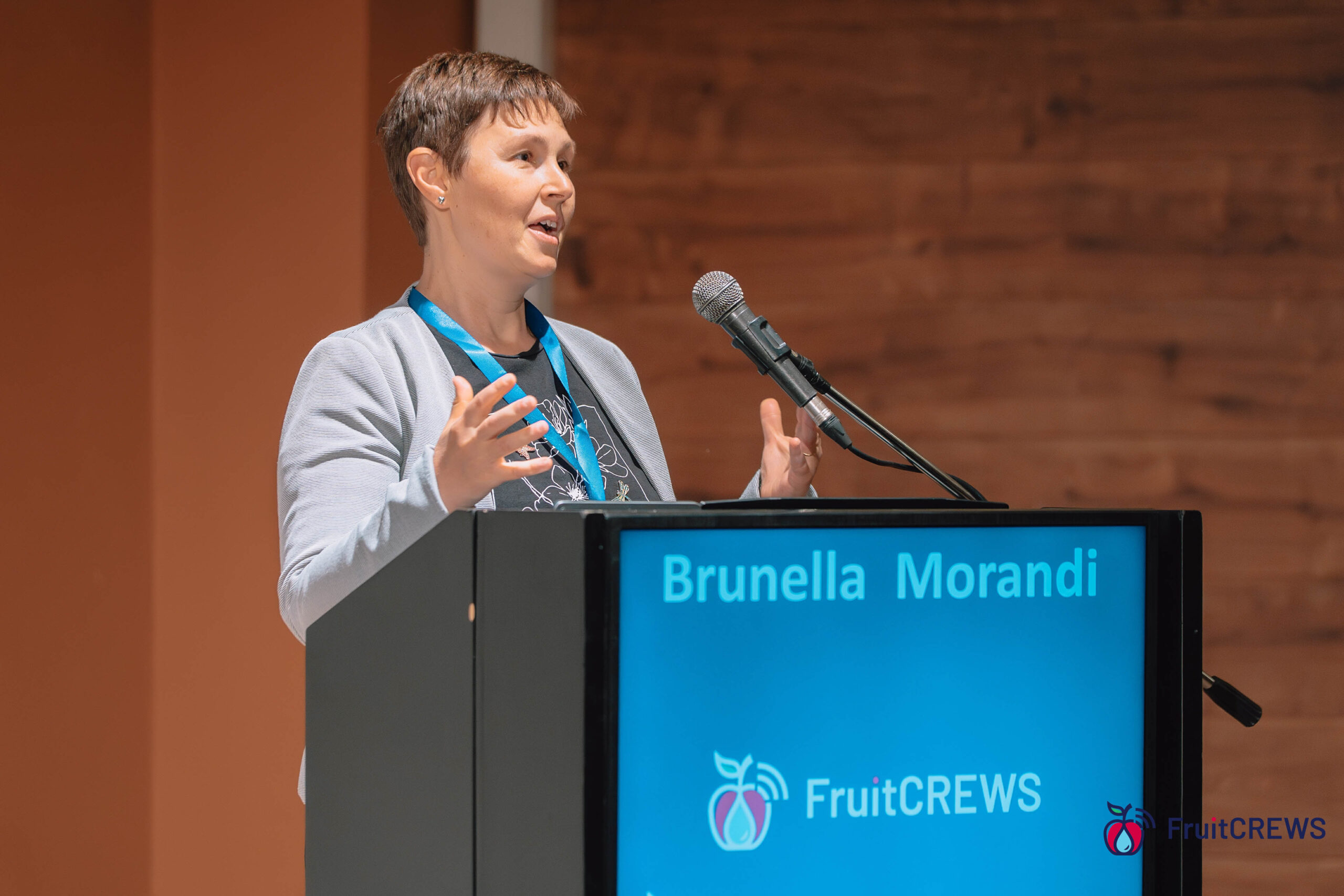
1. In two or three sentences, what was your main role in FruitCREWS, and which achievement of your Working Group (or area of responsibility) are you most proud of?
As Chair of FruitCREWS, I have coordinated the Action’s scientific and networking activities, liaised with the COST Association and worked with the Core Group to keep our programme on track. An equally important part of my role has been to encourage new initiatives and to share with colleagues the enthusiasm that makes a network productive. I am most grateful for the support received from the Core Group and all other colleagues, and proud of the community we have built across disciplines and countries, connecting research on fruit tree water relations with the practical needs of growers and technology providers.
2. What is your most memorable moment from the four years of the Action (a meeting, a field visit, a discussion or a person you met)?
For me, it was our final workshop at the European Parliament Info Hub in Brussels on 24 June 2026. After almost four years of collaboration, we brought our findings and recommendations into a discussion with policymakers and representatives of the fruit and irrigation sectors. It was particularly meaningful to see our community contribute to a debate about how Europe can respond to water scarcity and heat waves while sustaining agricultural production. The discussion made clear that progress depends on helping growers put scientific knowledge and available technologies into practice, with the advisory support and policies needed to make adoption possible.
3. In one sentence: what will remain of FruitCREWS in five years’ time?
I hope FruitCREWS will leave a lasting international community that continues to develop and share solutions for resilient fruit production and sustainable water use, working closely with growers, industry and policymakers, with many friendships that endure well beyond the Action.
4. When FruitCREWS started in October 2022, what did you hope it would achieve? Looking back, what turned out better than expected, and what turned out differently?
When we started, I hoped we would bring together the knowledge needed to connect fruit tree physiology with better irrigation decisions. We had ambitious plans to identify useful indicators of water stress, compare models and irrigation strategies, and clarify how this knowledge could improve decision support systems for growers. As our discussions developed, we became increasingly aware of how much responses vary between crops, environments and stages of development. Translating that complexity into reliable recommendations was more demanding than we had anticipated. The network gave us a valuable opportunity to compare evidence, identify gaps and develop questions for future collaborative research.
What exceeded my expectations was the human side of the Action. I initially imagined its legacy mainly in terms of scientific outputs. I now see how much those outputs depend on people getting to know one another, sharing ideas openly and developing the trust needed to work together. The collaborations and friendships that grew through FruitCREWS give me confidence that this work will continue.
5. In your view, what did FruitCREWS make possible that a single research project could not have done?
ANSWER – NO CHANGES
FruitCREWS gave us a breadth and continuity of exchange that would have been difficult to achieve within a single research project. I was especially impressed by the contribution of young researchers. They helped shape reviews and surveys, took part in training schools and workshops, and visited other laboratories through Short-Term Scientific Missions. Seeing them take responsibility and develop their own collaborations has been one of the most rewarding aspects of chairing the Action. I believe we have helped prepare a new generation of scientists to lead research on fruit tree water relations and irrigation.
6. The Action formally ends on 16 October 2026. How will the FruitCREWS community stay active, and what would you like it to achieve in the next three to five years?
FruitCREWS grew out of the Water Relations and Irrigation Working Group of EUFRIN, the European Fruit Research Institutes Network. I see that group as a natural home for continuing our exchanges, while maintaining the wider international connections developed through the Action. Joint publications and new research proposals can help us sustain that momentum.
Over the next three to five years, I would like us to strengthen our dialogue with European policymakers and make the needs of perennial crops more visible in discussions about water resilience. Orchards are long-term investments, and their capacity to adapt to water scarcity and heat has implications that extend across growing seasons. I would like our community to advance research on plant responses and irrigation tools while working more closely with growers, advisers and technology providers to support their practical use. For me, success would mean that the relationships built through FruitCREWS lead to coordinated research and policies that help fruit growers adapt.
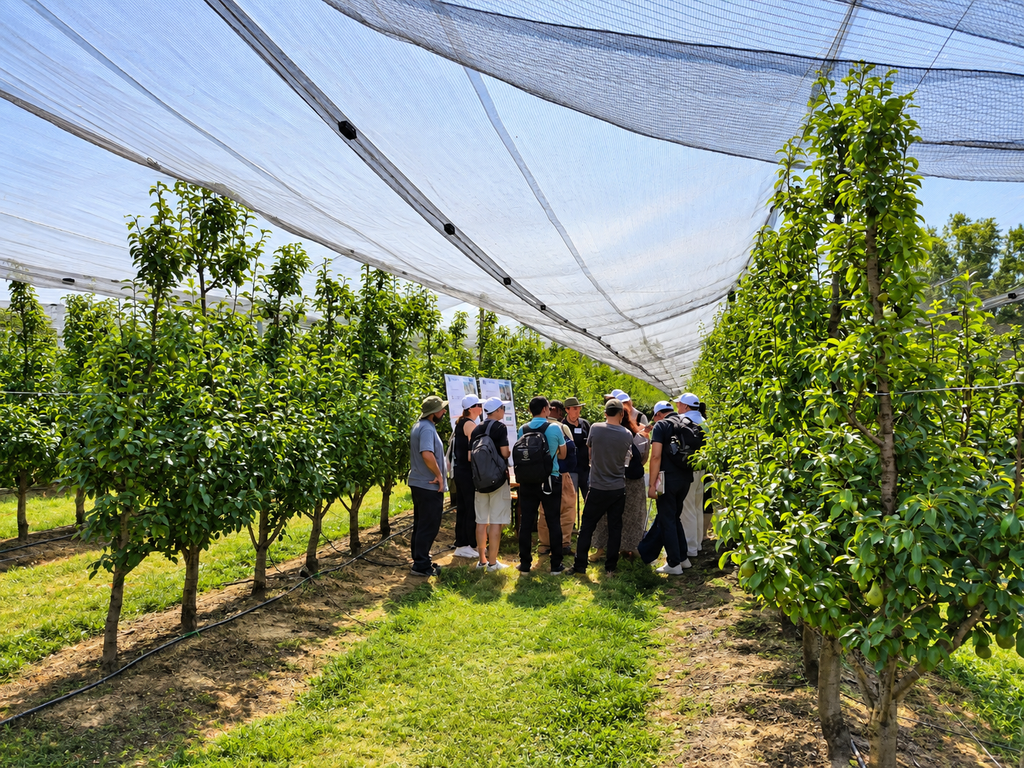
Italy
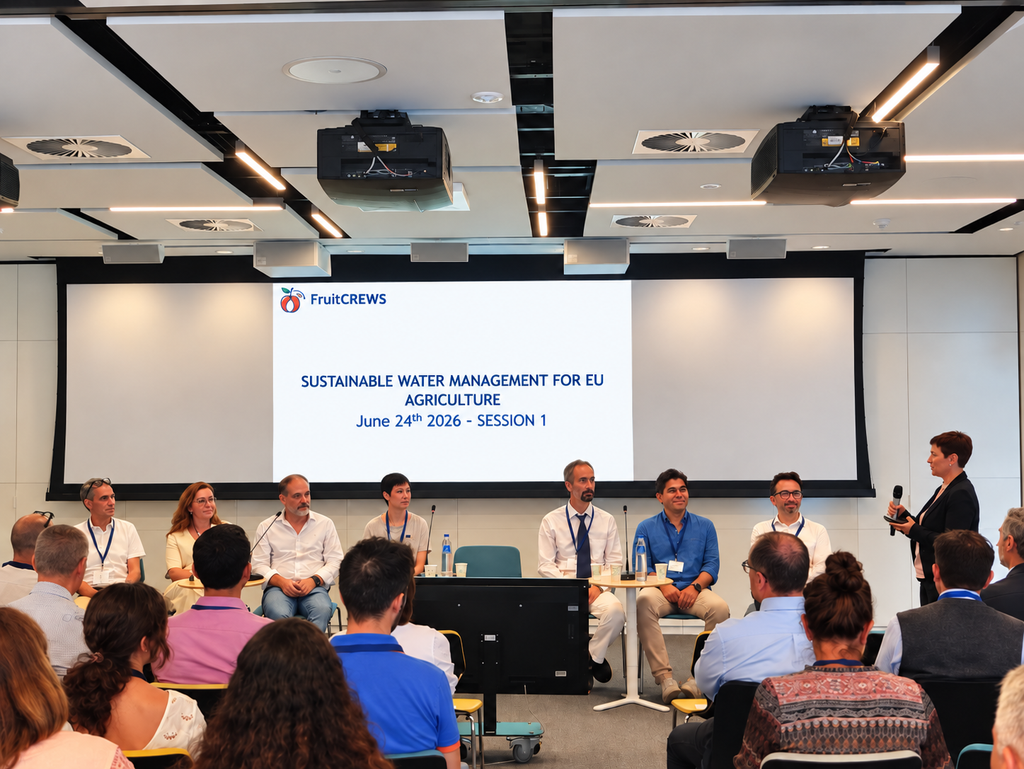
Brussels, 24 June 2026
Prefer to read offline? Download the interview as a PDF, here.