
1. In two or three sentences, what was your main role in FruitCREWS, and which achievement of your Working Group (or area of responsibility) are you most proud of?
I coordinated the identification and prioritisation of Research and Innovation (R&I) gaps with strong potential for future support under European and national funding programmes. My principal contribution was the preparation of the FruitCREWS Position Paper on Research, Innovation and Policy Priorities for Improving Water Productivity and Resilience in Fruit Tree Crops, which helps to define strategic research agendas and policy recommendations to enhance water productivity and climate resilience in fruit production systems.
2. What is your most memorable moment from the four years of the Action (a meeting, a field visit, a discussion or a person you met)?
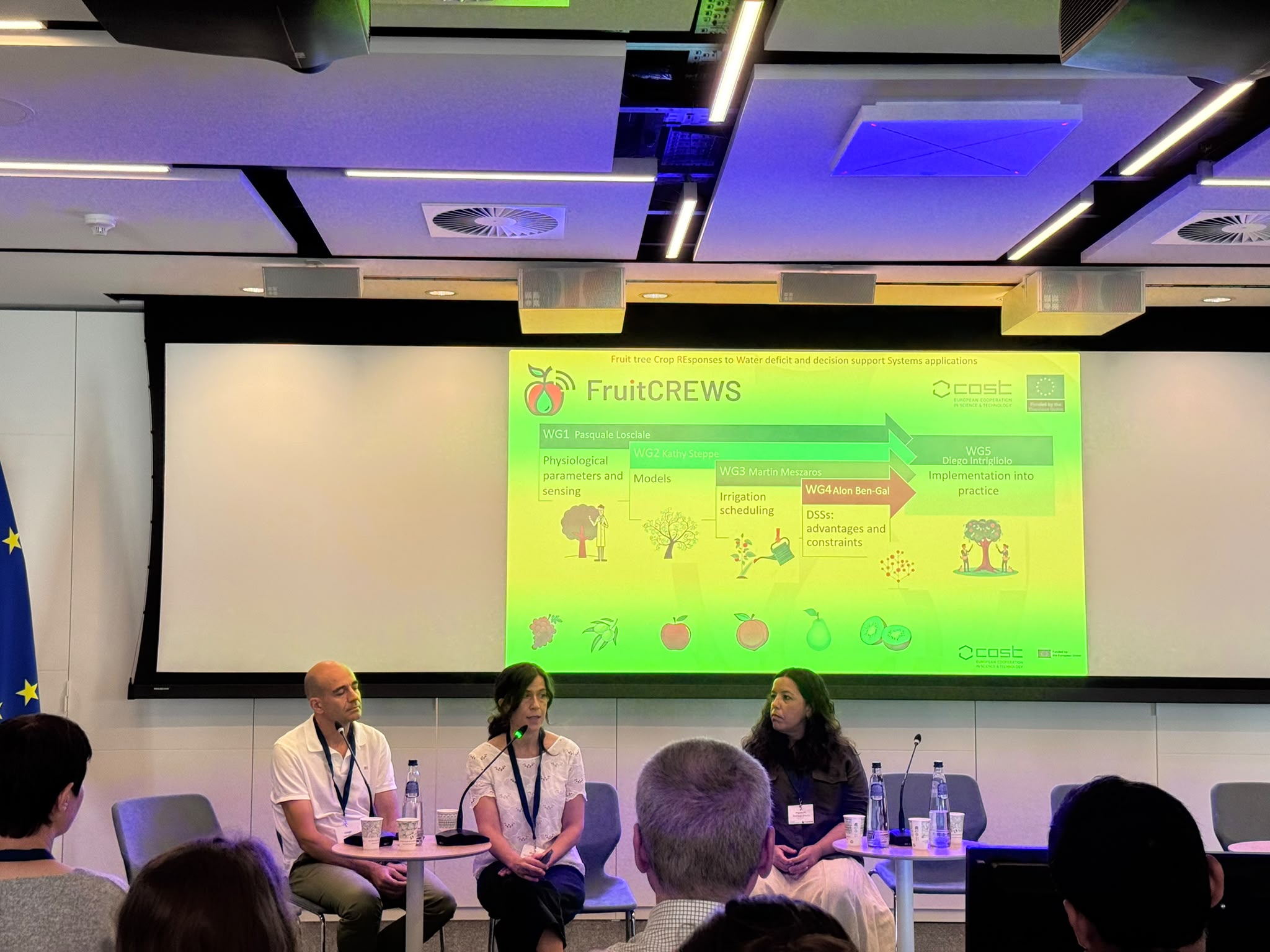
The annual meeting in Seville was instrumental in collecting input from the FruitCREWS community. Through constructive scientific discussions among researchers and stakeholders, we identified and prioritised key R&I gaps, which provided the basis for the FruitCREWS Position Paper on future research, innovation, and policy priorities.
3. In one sentence: what will remain of FruitCREWS in five years’ time?
The R&I priorities identified by the network, set out in the FruitCREWS Position Paper and in an Editorial published in Scientia Horticulturae (https://doi.org/10.1016/j.scienta.2026.114908), will continue to provide strategic guidance for future research, innovation, and policy actions aimed at improving water productivity and resilience in fruit tree crops.
4. If policy makers take only one message from the FruitCREWS Position Paper, which one should it be, and why?
Achieving real-world impact requires an integrated management approach that bridges technical innovations with the socio-economic constraints and opportunities specific to each region. The successful uptake of innovative solutions will depend on their integration into local production systems, institutional frameworks, economic conditions, and stakeholder needs. This will ensure that research outcomes can effectively contribute to greater water productivity and resilience in fruit tree crops.
5. Between the workshop at the European Parliament in June and the EU AgRI 2040 conference in September, you discussed water resilience directly with EU institutions. How receptive were they to the needs of the fruit sector, and what surprised you?
I was positively surprised by how receptive policymakers were to the outcomes of the COST Action. The timing of our work was particularly good, as the main outputs of the Action became available just when the EU Water Resilience Strategy was being launched, with a major focus on increasing water use efficiency. This alignment highlighted the relevance and timeliness of the research carried out by the FruitCREWS network.
In addition, a significant proportion of the research reviewed within the COST Action was devoted to improving water productivity in fruit tree crops. By identifying key knowledge gaps, innovative solutions, and best management practices, the network has contributed valuable evidence to support future policies and research agendas aimed at improving water use efficiency, resilience, and sustainability in the fruit sector. The Position Paper and the Editorial published in Scientia Horticulturae provide a solid scientific basis for these future developments and help bridge the gap between research outcomes and policy needs.
6. What has to happen in the next EU research framework and in the CAP so that the priorities identified by FruitCREWS are actually taken up?
Within the Common Agricultural Policy (CAP), dedicated funding should be allocated to support the deployment of innovation on the ground, for example by continuing and strengthening EIP-AGRI Operational Groups. Initiatives of this kind are essential for bringing together researchers, innovators, advisors, farmers, and other end-users to jointly refine technical solutions and, most importantly, demonstrate their effectiveness under real farming conditions.
While significant progress has been made in developing innovative approaches to improve water productivity and resilience in fruit tree crops, greater efforts are needed to facilitate their adoption at scale. In this regard, more active involvement of regional and national water management authorities is crucial. Their engagement would help ensure long-term continuity, provide an enabling regulatory environment, and promote the integration of successful innovations into water management policies and practices.
Strengthening collaboration between the research community, agricultural stakeholders, and water authorities would not only accelerate the uptake of innovative solutions but also help align technological advances with broader water governance objectives. Such a coordinated approach is essential for achieving lasting impacts on water use efficiency and climate resilience in the agricultural sector.
Prefer to read offline? Download the interview as a PDF, here.