
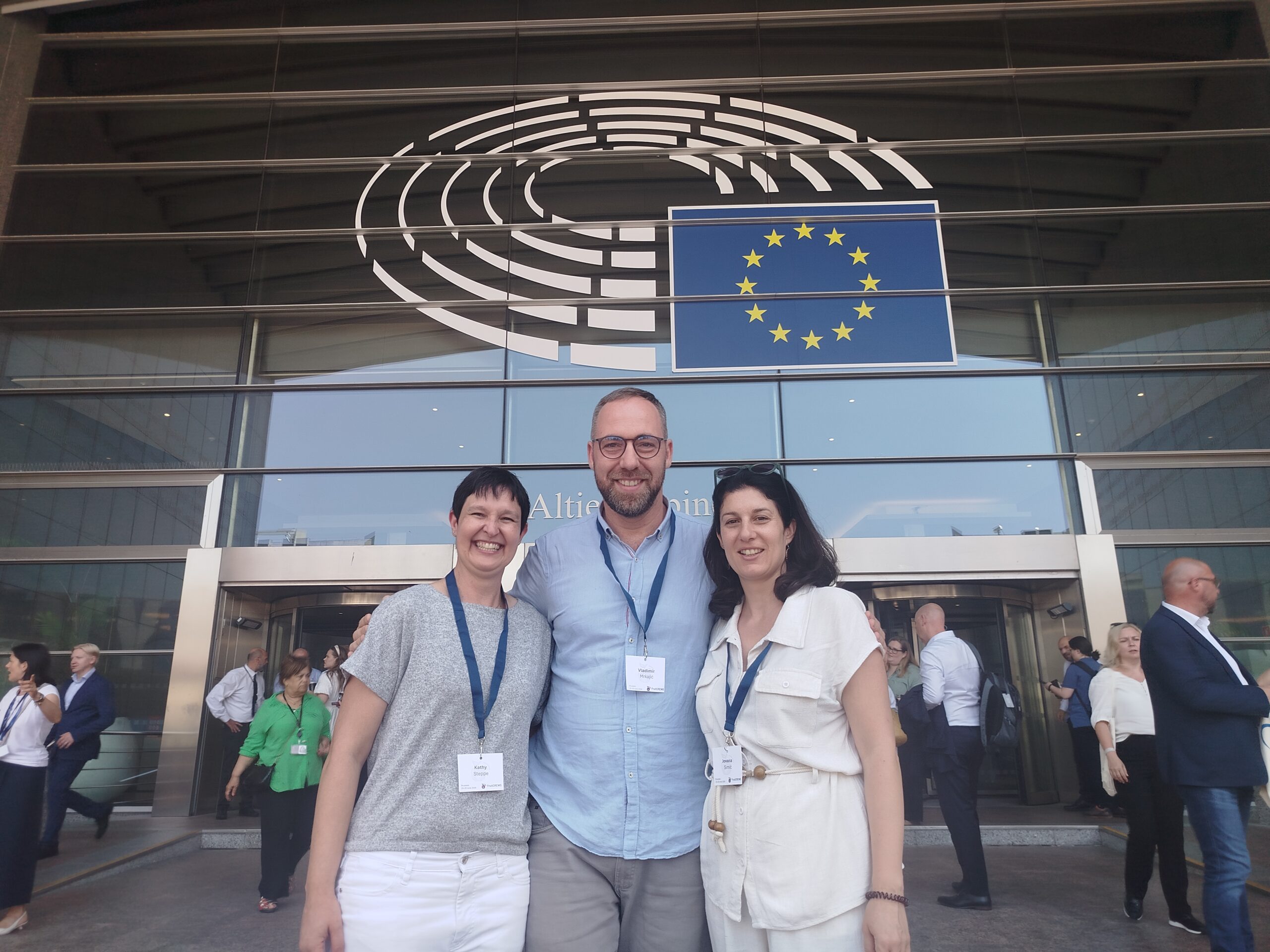
Dr Vladimir Mrkajić, Science Communication Coordinator (InoSens, Serbia)
1. In two or three sentences, what was your main role in FruitCREWS, and which achievement of your Working Group (or area of responsibility) are you most proud of?
My main responsibility was to coordinate the communication of the many activities, results and achievements of our COST Action. I am most proud of the fact that FruitCREWS had a very active team of communication coordinators, who reported the main activities and outputs of each Working Group: Konni Biegert (WG1), Or Sperling (WG2), Miguel Ángel Pardo Picazo (WG3), Assaf Chen (WG4) and María del Mar Borrego Marín (WG5). Equally important was Jovana Simić, our dedicated Social Media and Website Manager.
I would also like to mention our Chair, Brunella Morandi, and Vice-Chair, Virginia Hernández-Santana, who supported the press releases and scientific publications; our Grant Awarding Coordinator, George Manganaris, who helped us obtain feedback from each mobility grantee, which was very important for spreading the news and promoting the Action’s activities among our target audiences; and all the FruitCREWS members who benefited from mobility grants and shared their experience through social media posts and website articles.
2. What is your most memorable moment from the four years of the Action (a meeting, a field visit, a discussion or a person you met)?
It is difficult to single out one moment, as there were many, but I would highlight two. The first were our Core Group meetings, such as those in Naoussa and Berlin. The second came from an unexpected place. I was invited by the COST Association to the Western Balkans Ministerial Meeting in Podgorica, Montenegro, where I had the opportunity to represent Serbia and to present FruitCREWS at a session on COST’s role in research cooperation in the region. It was inspiring to meet COST fellows from across the Western Balkans and to discuss with Prof. Åse Gornitzka, President of the COST Association, and Katalin Alföldi, Policy Adviser at COST, how COST Actions can support researchers from our region. On the same day, I was a featured speaker at the Science|Business Widening Group conference “From Knowledge to Impact: Nurturing Research and Innovation in South-East Europe together with the EU” at the University of Montenegro, where I presented FruitCREWS once again.
3. In one sentence: what will remain of FruitCREWS in five years’ time?
What I can say for sure is that strong bonds were formed between people from different research institutions, and I am already witnessing that many of our Action members are actively exploring and using opportunities to continue their cooperation.
4. You represented FruitCREWS at the Western Balkans Ministerial Meeting in Podgorica and at the Science|Business conference at the University of Montenegro. What message did you share about the value of COST Actions for researchers and institutions from the Western Balkans?
My main message was that COST Actions are one of the most accessible entry points into European research for researchers from our region. Through FruitCREWS, researchers and institutions from Serbia and other Inclusiveness Target Countries (ITCs) became part of an international network, gained new skills, took part in mobility grants and built collaborations that would be very difficult to start alone.
At the Science|Business conference, I also reflected on the success of Serbian public and private institutions in Horizon Europe, and on how networks like COST help to turn regional strengths into drivers of European innovation. For many organisations from our region, a COST Action is the first step, and the next step is a joint Horizon Europe project. Representing FruitCREWS at a ministerial meeting also showed me that the work of a single Action can become a good example in a much wider policy discussion on research cooperation.
5. Over four years, FruitCREWS communicated through press releases, newsletters, the website and LinkedIn, and ended with a Position Paper discussed with EU institutions. Where do you see the biggest impact of the Action and its communication, and why?
I would look at impact in three ways. In terms of policy, the biggest impact was certainly our final workshop at the European Parliament Info Hub in Brussels in June 2026. For the first time, our communication was not only about informing the scientific community, but about bringing evidence directly to policy makers, farmers’ organisations and irrigation associations. The press releases before and after the workshop, and then the Position Paper, helped us translate four years of research into clear messages for a policy audience.
In terms of science and research, the biggest impact came from joint scientific publications and from the many visits and short stays of Action members at host institutions. These were particularly beneficial for our younger members and for those coming from ITCs.
Finally, in terms of promoting excellence and the career growth of researchers and scientists in this field, the biggest impact came from personal reports shared as LinkedIn posts or news on our website. Peer-to-peer communication seems to achieve the greatest reach and engagement.
6. You came to FruitCREWS from a background in EU project development and communication, working with InoSens in Serbia. What did the Action give you and your organisation, and what advice would you give to future COST Actions on communicating their science?
For me personally, one of the most valuable benefits was the COST Academy trainings for Action Science Communication Coordinators. During the Action, I attended several of them, and the most memorable were the trainings on media skills and storytelling. COST brought top educators to these sessions, and they really improved my communication skills and the way I work with researchers on their messages.
For InoSens, FruitCREWS meant new partnerships and a better understanding of the research and policy needs in agricultural water management. I also had the privilege of speaking at a few of our meetings about what we do best at my company: successfully preparing and implementing Horizon Europe projects. Some partners were curious to learn more, and we even won a proposal together. My advice to future COST Actions is to take communication seriously from the first day: prepare a realistic communication plan, involve a contact person from each Working Group, use the COST Academy trainings, and think early about how your results will reach policy makers and practitioners, not only other scientists.
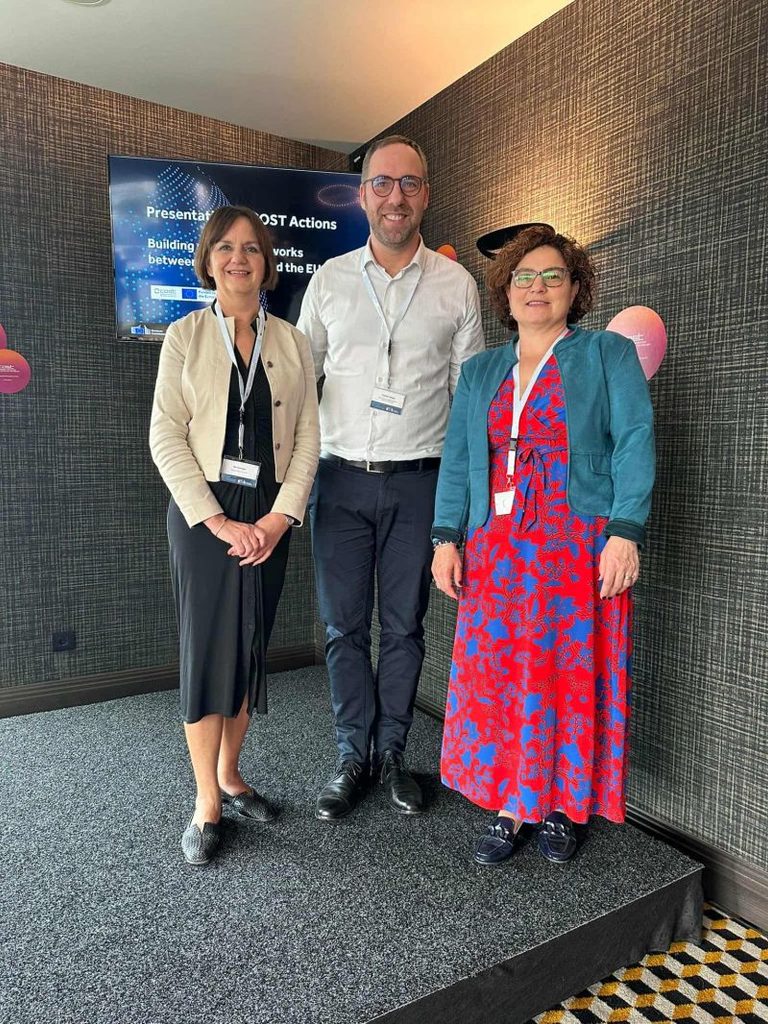
of the COST Association, and Katalin
Alföldi (right) in Podgorica.
Prefer to read offline? Download the interview as a PDF, here.